

A smart building integrates IoT technologies to create an optimized, energy-efficient, and comfortable environment. Thanks to connected sensors, data analysis, and automation, these next-generation buildings reduce operating costs, improve occupant comfort, and minimize environmental impact. The shift towards smart buildings is no longer a luxury, but an economic and ecological necessity. Tighter environmental regulations, occupant expectations, and economic pressure are driving owners to adopt these technologies to remain competitive.
 Some advantages :
Energy savings
20-30% reduction in energy costs thanks to automated optimization
Optimized comfort
Environment adapted in real time to occupants' needs
Predictive maintenance
40% reduction in maintenance costs through anticipation
Property value
15% increase in property value
Regulatory compliance
Automatic compliance with environmental and health standards
Productivity
12% improvement in occupant productivity

Some solutions :
- Smart HVAC system (optimized heating, ventilation, and air conditioning)
Zone-by-zone regulation based on occupancy Smart preheating based on weather forecasts Adaptive ventilation based on air quality Optimized heat recovery Integration of renewable energies Savings: 25 to 40% on heating/air conditioning
- Smart lighting / Automated management based on occupancy and brightness
Presence detection via PIR/radar sensors Automatic dimming based on natural light Advanced scheduling Savings: 50 to 70% on lighting
- Integrated security
Biometric access control and badges AI-powered video surveillance behavior detection Multi-technology intrusion detection Smart fire alarm Benefits: 24/7 security, reduction in false alarms
- Centralized technical management / Unified supervision and control
Real-time multi-system dashboard Smart preventive maintenance alerts Automatic energy performance reports Mobile remote management interface Benefits: Total control, optimized maintenance
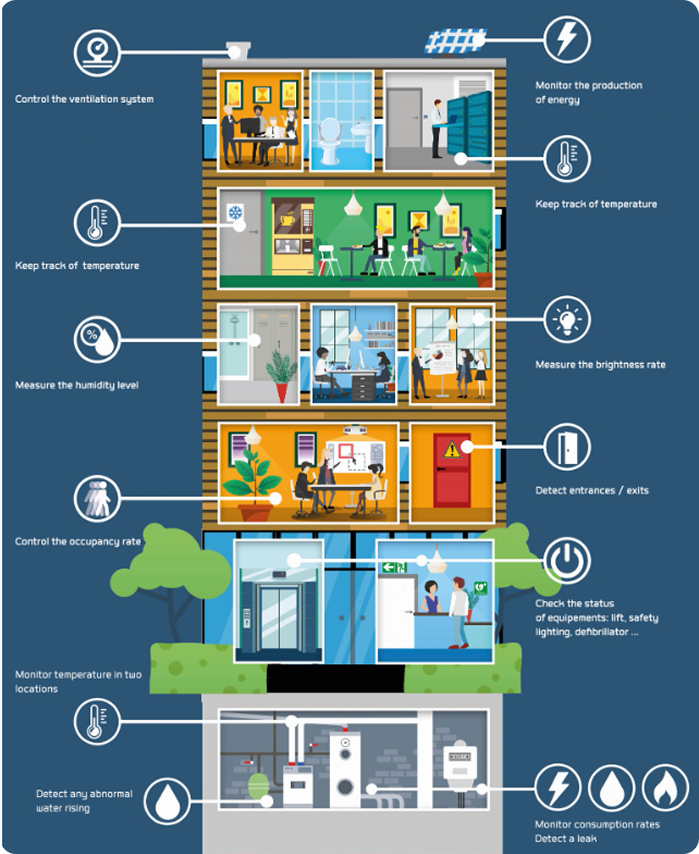
Some sensors and detectors
Network of sensors for continuous monitoring :

Environmental sensors :
Temperature, humidity, CO2, VOCs

Presence sensors :
PIR, radar, people counting

Light sensors :
Automatic measurement and adjustment

Energy sensors :
Real-time consumption

Safety sensors :
Smoke, gas, intrusion, water

Vibration sensors :
Equipment monitoring
Ready to transform your industry ?
Our experts are available to assist you with your digital transformation projects, tailored to the specific needs of your industry.
